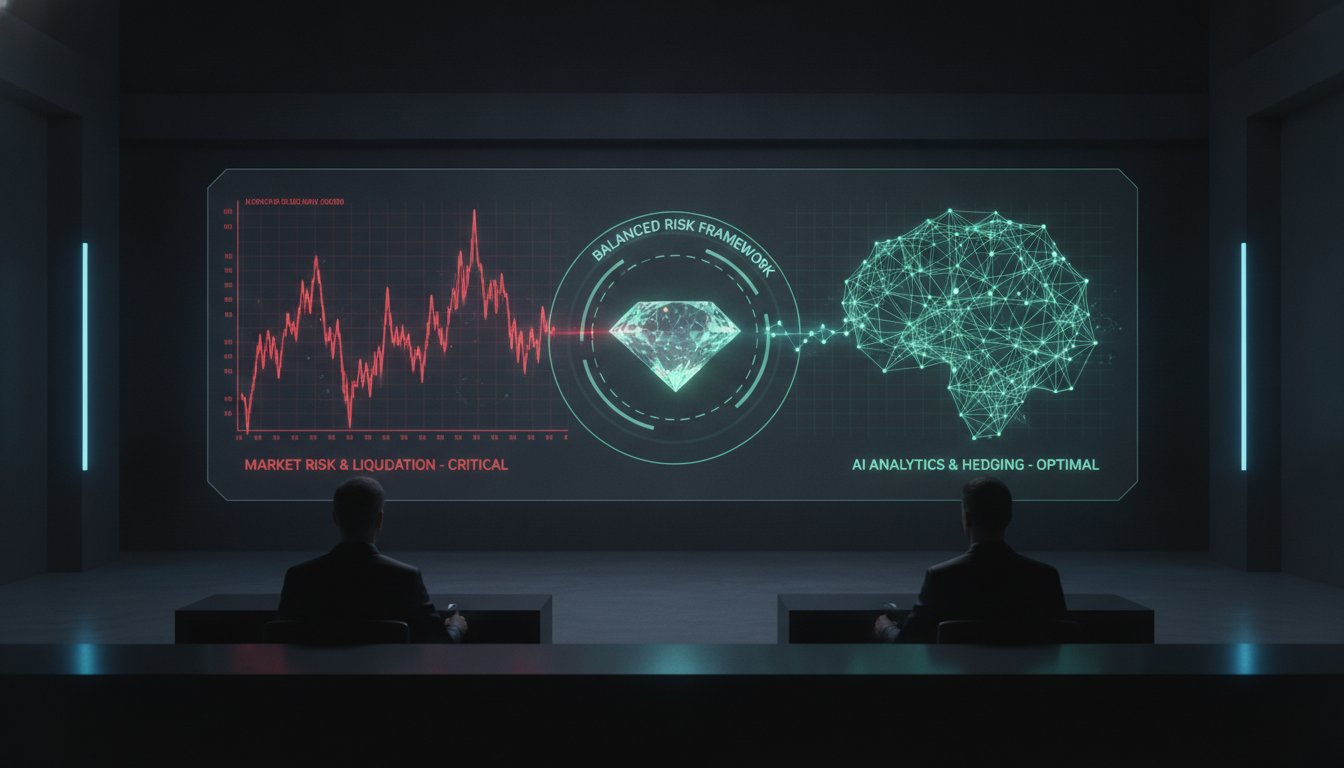

On June 4, 2026, over $1.1 billion in liquidations occurred within a single 24-hour cycle. Most of these losses hit traders who prioritized raw speed over technical precision. You've likely experienced the exhaustion of 24/7 market monitoring and the frustration of falling for sophisticated bull traps. The current promise of AI crypto trend analysis is often framed as a predictive crystal ball. In reality, real-time speed without a systematic filter is just high-velocity noise.
We provide a clinical, emotionless perspective on market trends. You'll learn why speed is secondary to multi-timeframe confirmation and how to build a validation framework that actually works. We'll show you how to use machine learning to filter out fake-outs and reduce screen time through automation. This article previews the transition from speculative retail habits to institutional-grade execution, explaining how Sniper AI Weekly helps you navigate the high-volatility, post-MiCA landscape of 2026 with technical precision. It's time to stop chasing the ticker and start validating the trend.
Key Takeaways
- Distinguish between raw data streaming and autonomous AI intelligence to eliminate high-velocity market noise.
- Identify the critical myths of crypto prediction, specifically the fallacy of trading every 1-minute candle.
- Implement a systematic AI crypto trend analysis framework focusing on macro regimes and liquidity positioning.
- Avoid the "Latency Trap" by utilizing multi-timeframe filters that prevent overtrading during market fake-outs.
- Leverage an automated 8-layer validation process to achieve institutional-grade precision through Sniper AI Weekly.
What is Real-Time AI Crypto Analysis? Defining Institutional Speed
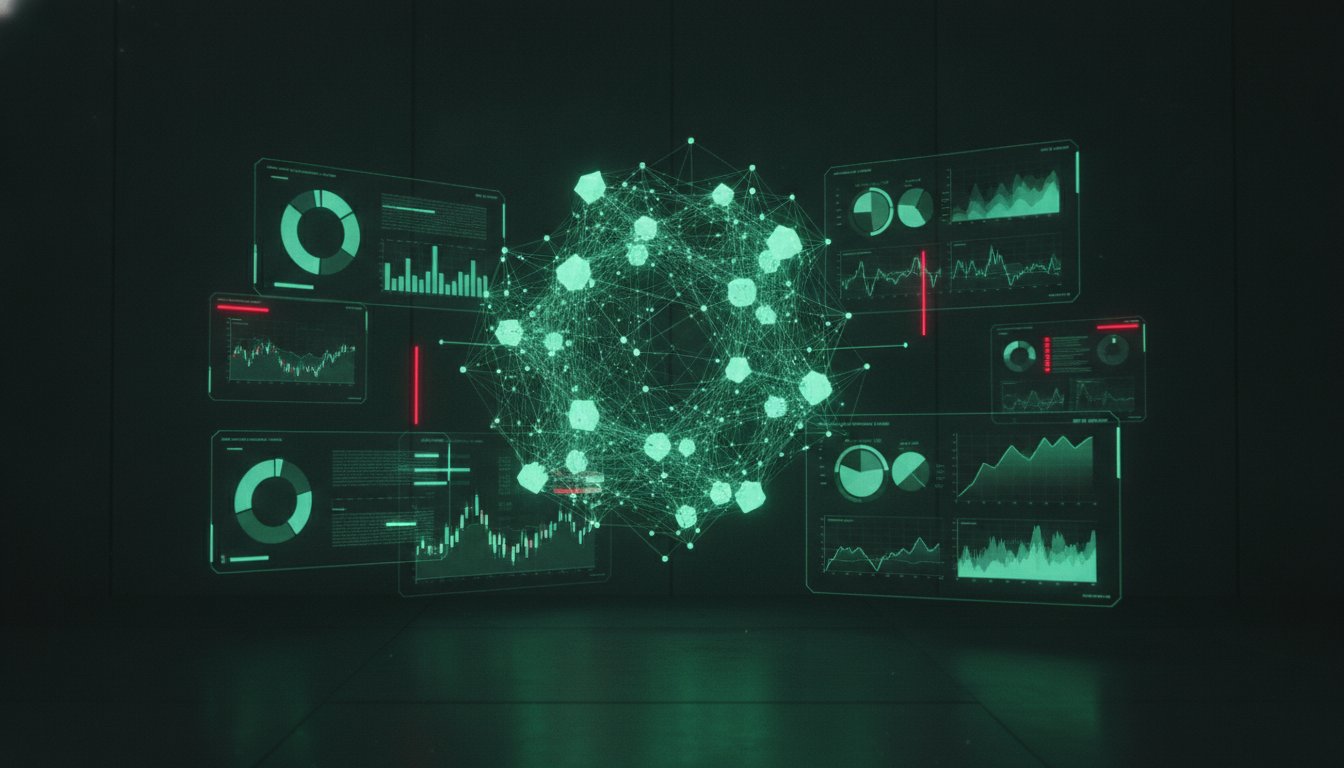
Real-time AI crypto trend analysis is the systematic application of machine learning models to live blockchain protocols and exchange order books. It's not a mere price feed. It's an interpretation layer. Most retail platforms provide raw data streaming. They show you what is happening. They don't tell you why it matters. Autonomous AI intelligence fills this gap. It processes millions of data points to identify institutional footprints before they manifest as retail trends.
In the 2026 market, speed is a liability without a filter. True institutional speed refers to the sub-millisecond validation of a trade idea. Modern Algorithmic trading systems don't rely on simple moving average crossovers. Those are legacy tools. They're too slow for current volatility. We use multi-timeframe confirmation to reduce false signals. A signal on the 1-minute chart is noise. A signal confirmed across the 15-minute, 1-hour, and 4-hour charts is a trend. This clinical approach separates professional execution from speculative gambling.
The Infrastructure of Modern Crypto AI
Technical precision requires high-tier infrastructure. We utilize co-located servers in GCP Tokyo for rapid data ingestion. This minimizes the gap between exchange events and AI processing. Our AI agents monitor the markets on a 24/5 institutional cycle. This aligns with professional trading floors. It ensures the system is at peak performance when liquidity is highest. We integrate Claude AI and other specialized LLMs for sentiment processing. This allows the system to digest thousands of news reports and social signals in seconds. It converts chaotic data into actionable intelligence.
Quantitative vs. Qualitative AI Inputs
A clinical market view requires two distinct data types. Quantitative inputs focus on the hard numbers. They include:
- Volume profiles and delta analysis.
- Liquidity clusters at key price levels.
- Order book imbalance and spoofing detection.
Qualitative inputs focus on the soft data. This involves automated news analysis and social sentiment tracking. It's the study of why the money is moving. The synergy between these inputs creates a systematic validation framework. Quantitative data might show a price spike. Qualitative data might reveal it's a fake-out driven by social media bots. The AI filters this out. It waits for convergence. This is the foundation of Sniper AI Weekly. We automate this 8-layer validation process. You get the intelligence without the noise.
3 Critical Myths About AI-Driven Crypto Price Predictions
Retail expectations often diverge from institutional reality. The marketing surrounding AI crypto trend analysis frequently suggests a "magic box" capable of generating risk-free returns. This is a fallacy. Machine learning is a tool for statistical probability, not a psychic medium. To utilize these systems effectively, you must first strip away the speculative hype and understand the limitations of the technology.
- Myth 1: AI predicts exact market tops and bottoms. No model can account for a sudden "black swan" event or a manual whale liquidation. AI identifies high-probability exhaustion zones and liquidity clusters. It doesn't pinpoint the exact dollar.
- Myth 2: Real-time analysis requires trading every 1-minute candle. High-frequency data ingestion is necessary for the system, but it's often noise for the trader. Real-time intelligence should inform a strategic position, not trigger a frantic scalping habit.
- Myth 3: More indicators lead to higher accuracy. This is the "Overfitting Trap." Adding 100 indicators to a model creates a system that perfectly explains the past but fails to navigate the future. Complexity is not a proxy for performance.
The reality is clinical. AI identifies zones where the statistical edge shifts in your favor. It provides a data-driven "weather report" for the market. It does not provide a guaranteed outcome. For those seeking a more grounded approach, evaluating systematic tools can help bridge the gap between raw data and actionable intelligence.
The Overfitting Problem in Crypto Models
Overfitting occurs when a machine learning model mistakes historical noise for a legitimate trend. If a model is trained too aggressively on past data, it "memorizes" the charts. It looks impressive in backtests. However, it collapses in live markets because it cannot adapt to new variables. Forward-testing is the only clinical standard that matters. You should be skeptical of any service that presents "perfect" historical results without showing how the model performs against unseen, live data. Reliable systems prioritize robust, simple logic over fragile, complex curves.
Predictive vs. Reactive Systematic Trading
Predictive systems try to guess where the price will go. Reactive systems validate where the price is already moving. In the volatile environment of 2026, reactive validation is significantly more reliable. By waiting for multi-timeframe confirmation, you avoid the "fake-outs" that liquidate aggressive guessers. This is the core of systematic crypto trading. It replaces the emotional urge to "be first" with the technical requirement to "be right." Probabilistic modeling in 2026 crypto volatility is the quantitative assessment of likelihood across multiple data vectors to determine the statistical edge of a specific market entry. It's about finding the path of least resistance, not predicting the future.
The Latency Trap: Why "Real-Time" Data Often Increases Risk
The Latency Trap occurs when raw execution speed outpaces technical validation. In the volatile 2026 market, sub-millisecond data ingestion is a standard feature for institutional engines, yet it's often marketed to retail traders as a predictive edge. It isn't. High-frequency data without a systematic filter leads to chronic overtrading. On June 4, 2026, the market saw over $1.1 billion in liquidations. Many of these positions were triggered by "real-time" alerts that failed to recognize a sophisticated bull trap. Speed is a liability when the direction is wrong.
Institutional-grade execution differs from retail "real-time" apps in its core objective. Retail apps prioritize user engagement through constant, low-value notifications. Institutional systems prioritize precision through multi-timeframe confirmation. If the underlying trend is a "fake-out," sub-millisecond execution only ensures you enter a losing trade faster. Effective AI crypto trend analysis must serve as a barrier, not just a conduit. Weekly intelligence provides the macro context required to survive these micro-volatility events. It replaces minute-by-minute anxiety with a clinical, data-driven perspective.
Filtering Market Noise with AI Agents
Machine learning models are now essential for identifying deceptive market behavior. AI agents monitor order books to ignore "wash trading" and liquidity spoofing in real time. These agents recognize when a price move lacks the volume profile to sustain itself. By utilizing ai for crypto market patterns, our system detects true reversals rather than temporary liquidity grabs. Automated filters are the only defense against human burnout in a 24/7 market. They allow the technician to remain clinical while the machine handles the exhaustive data processing. 5 AI agents. 8 signal filters. No emotional fatigue.
The Cost of High-Frequency FOMO
Real-time alerts often trigger emotional, dopamine-driven responses. This is "High-Frequency FOMO." It's the antithesis of a data-driven framework. Retail traders often treat every alert as a mandatory action, mirroring the "signal group" mentality of chasing every pump. The institutional approach is different. It's patient. It waits for multi-layer validation before committing capital. We don't guess. We validate. This reduces the psychological toll of market monitoring and ensures every entry is backed by a clinical statistical edge. Automated systems don't feel anxiety. They only execute on confirmed parameters. This is how you bridge the gap between speculative retail habits and professional execution.
Establishing a Validation Framework for AI Crypto Trend Analysis
Quantity is the enemy of precision. While retail platforms boast coverage of 9,000 assets, institutional frameworks prioritize high-probability filtering. Effective AI crypto trend analysis requires a clinical sequence of validation steps. This process ensures that a signal isn't just a localized price spike, but a legitimate shift in market structure. The framework is a sequence. 5 steps. 1 goal. Technical precision.
The systematic validation process follows this order:
- Step 1: Macro Sentiment Check. The system identifies the broad market regime. It determines if the current environment is risk-on or risk-off based on global liquidity and institutional data feeds.
- Step 2: Liquidity Analysis. We locate where the "smart money" is positioned. This involves identifying liquidity clusters and order book imbalances that indicate significant buy or sell interest.
- Step 3: Technical Pattern Confirmation. We use ai for crypto market analysis tools to verify chart geometry. This removes the subjective bias of manual chart drawing.
- Step 4: Risk-Reward Assessment. The system performs an automated calculation of position sizing. If the statistical edge doesn't justify the risk, the trade is discarded.
- Step 5: Execution via Non-Custodial API. The final step is autonomous execution. You maintain asset control through your own exchange keys. We never hold your funds.
This sequence transforms raw data into institutional intelligence. To implement this level of precision in your own workflow, you can access our automated engine today.
The 8-Layer Validation Framework
Layered filters are the only way to reduce false positives. In our system, AI agents act as gatekeepers for each layer. A signal must pass every check before it triggers an alert. This is why a best crypto intelligence service must provide transparency in its filtering logic. We don't offer "black box" signals. We provide a data-driven audit trail for every validation layer, from delta analysis to multi-timeframe convergence.
Risk Management: The Final Filter
Precision execution is useless without a defensive shell. Even the most sophisticated AI analysis requires crypto risk management tools to survive market volatility. Our "Your API key, your funds" rule ensures you retain 100% custody of your assets. The system automates the "Exit" strategy as part of the trend analysis loop. It monitors for invalidation points and triggers stop-losses or profit-taking targets autonomously. This removes the emotional hesitation that often leads to retail losses. The machine doesn't hope. It executes.
Sniper AI Weekly: Professional Intelligence Without the Noise
The transition from speculative retail habits to institutional precision requires a shift in how you consume market data. Sniper AI Weekly is a non-custodial intelligence framework designed to eliminate the exhaustion of manual chart monitoring. It moves away from the erratic "trading bot" narrative. Instead, it provides Sniper AI Weekly as a professional intelligence report. This service automates the 8-layer validation process described earlier. It filters millions of live data points into clinical, actionable insights. You don't need to monitor candles 24/7. The system does the work. It delivers data-backed intelligence directly to your dashboard. This is the current standard for AI crypto trend analysis in 2026.
We provide a clear alternative to the high-velocity noise of real-time feeds. Our focus is on "intelligence reports" rather than blind automation. This approach allows you to maintain a high-level view of market regimes while the machine handles the technical heavy lifting. It converts raw volatility into a structured statistical edge. 5 AI agents. 8 signal filters. One weekly report. This is how you achieve technical precision without the psychological cost of overtrading.
Automated Research vs. Manual Signal Groups
Manual signal groups are built on "guru" bias. These groups rely on human intuition, which is prone to emotional exhaustion and subjective interpretation. Automated research eliminates these variables. Our reports are generated based on hard data vectors, not social media sentiment or individual guesses. This focus on technical precision ensures institutional-grade performance for the individual trader. Mastering data-driven crypto trading builds long-term sustainability. It replaces the "get-rich-quick" hype with a systematic framework that survives varied market cycles.
Institutional Infrastructure for Retail Traders
Technical sophistication requires high-tier infrastructure. We utilize GCP Tokyo for rapid data ingestion and integrate Reuters data feeds for qualitative accuracy. Security is integrated into the core of the system. We use AES-256 encryption to protect your data. Our "Your API key, your funds" mantra ensures you retain 100% custody of your assets. We never hold user funds. This transparency is a marker of our institutional professionalism. We offer a "No Card Required" trial to allow you to verify our technical specifications without friction. The 2026 market doesn't reward hope. It rewards data. Start your clinical market analysis today.
Transition to Institutional-Grade Execution
The 2026 market demands a departure from high-frequency noise. Speed without a clinical filter is a liability. You've seen why "real-time" alerts often lead to the Latency Trap and chronic overtrading. Systematic success relies on layered validation and macro context rather than chasing 1-minute candles. It's the difference between speculative gambling and professional positioning.
Effective AI crypto trend analysis isn't about guessing the next move. It's about confirming the statistical edge. By utilizing institutional-grade infrastructure like GCP Tokyo, you move beyond the limitations of retail tools. Our clinical 8-layer validation framework removes the bias found in manual signal groups. Most importantly, you retain absolute control. Your API key, your funds. This non-custodial approach ensures security remains a technical certainty rather than a promise.
It's time to replace market anxiety with data-driven confidence. You can automate your research and focus on high-probability execution. Start your Sniper AI Weekly trial. No credit card required. The machine doesn't hope. It executes. Secure your technical edge today.
Frequently Asked Questions
Is real-time crypto AI analysis better than technical analysis?
AI is a computational extension of technical analysis. It processes volume delta, order book imbalance, and liquidity clusters at speeds impossible for manual charting. While traditional technical analysis identifies static patterns, AI validates them through multi-timeframe confirmation. It removes the subjective bias often found in human chart interpretation. This creates a more clinical, data-driven approach to market entry.
Can AI accurately predict crypto market reversals?
AI identifies high-probability exhaustion zones rather than pinpointing exact price points. It detects institutional footprints and liquidity sweeps that often precede a reversal. No system provides 100% accuracy. However, systematic AI crypto trend analysis reduces the frequency of falling for bull traps by requiring multi-layer validation before a reversal is confirmed. It focuses on probability, not certainty.
How do I distinguish between AI market noise and a real trend?
Distinguish legitimate trends through multi-timeframe convergence. Noise usually manifests as isolated price spikes on low-duration candles. A real trend shows sustained volume profiles and order book support across 1-hour and 4-hour timeframes. We use 8-layer validation filters to ensure a move has the technical backing to sustain itself before it's classified as a trend. The machine ignores the micro-fluctuations.
What are the risks of using automated AI for crypto trading?
Primary risks include model overfitting and unexpected market black swan events. Overfitted models perform well in backtests but fail in live, volatile markets. There is also the risk of poor API management. We mitigate this through a "Your API key, your funds" protocol and AES-256 encryption. Automated systems require clinical risk management parameters to prevent catastrophic losses during extreme volatility. Precision is the only defense.
Do I need to give an AI service my private keys?
No. You should never provide your private keys to any service. Professional intelligence frameworks like Sniper AI Weekly operate via non-custodial API keys. These keys should be configured with Trade permissions only, disabling Withdraw functions. This ensures you maintain 100% custody of your assets. Your funds remain on your exchange. Security is a technical requirement, not an option.
Is AI crypto analysis suitable for beginners?
It is suitable if the beginner prioritizes a systematic framework over speculative habits. AI crypto trend analysis reduces the learning curve by automating complex data processing like volume delta and liquidity analysis. However, it's not a set and forget solution. Beginners must still understand basic risk management and the technical difference between reactive validation and predictive guessing. It's a tool for the disciplined.
How often should I update my AI trend analysis models?
Models should undergo continuous forward-testing to adapt to changing market regimes. Market dynamics in 2026 shift rapidly due to new regulations like MiCA. While the underlying logic remains robust, the weighting of specific data vectors, such as institutional sentiment, requires weekly calibration. This ensures the system remains clinical and accurate. We handle this optimization to maintain institutional-grade performance.
What is the "Latency Trap" in crypto trading?
The Latency Trap occurs when execution speed outpaces technical validation. High-speed data ingestion is useless if it triggers trades on unconfirmed fake-outs. Retail traders often fall for this by reacting to every 1-minute alert. Institutional systems avoid this trap by using sub-millisecond infrastructure, such as GCP Tokyo, to validate moves across multiple layers before execution. Speed is a liability without a filter.