What if the most reliable indicator on your chart isn't a moving average, but the quantified anxiety of a million retail traders? Utilizing AI for crypto technical analysis allows you to see the shifts before they're reflected in the candle. Most traders react to price action after the move has already happened. They're trapped in a cycle of social media noise and late-stage FOMO. You've likely felt that frustration. The inability to objectively measure market fear often leads to entering trades at the exact moment the smart money is exiting.
This article provides a systematic framework to utilize institutional-grade sentiment intelligence to detect market cycle shifts. You'll learn how to identify when crowd psychology has decoupled from value. 5 data streams. 1 objective output. We'll break down the specific metrics used to eliminate speculative noise and establish a data-driven approach to cycle validation. This is about replacing emotional errors with technical precision. By the end of this guide, you'll have the tools to quantify greed and fear with clinical accuracy, moving you from a reactive participant to a proactive technician.
Key Takeaways
- Map the four-phase market progression to identify where crowd psychology decouples from fundamental asset value.
- Utilize NLP and Claude AI for crypto technical analysis to quantify intent and eliminate the ambiguity of manual sentiment tracking.
- Establish a 180-day neutral baseline to detect extreme sentiment clusters that signal cycle shifts before price action confirms them.
- Apply an 8-layer validation framework to filter synthetic bot activity and isolate high-integrity intelligence from market noise.
- Deploy Sniper AI Weekly to receive 8-layer validated cycle intelligence without the need for manual API configurations or technical overhead.
What is a Crypto Market Cycle and Why Does Sentiment Matter?
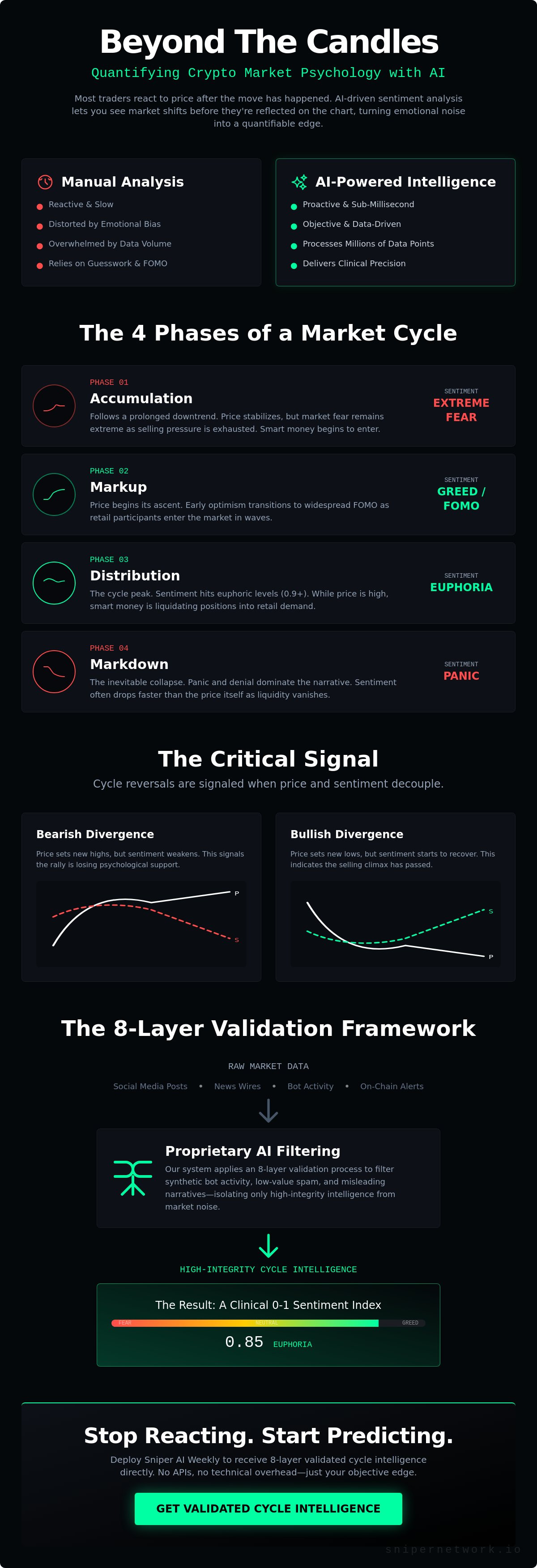
A market cycle is the structural progression of an asset's price, moving through four distinct stages: Accumulation, Markup, Distribution, and Markdown. In the volatile cryptocurrency sector, these cycles are accelerated. They aren't driven by fundamental shifts alone. They're driven by market sentiment. Psychology acts as the primary catalyst for the extreme overextension seen at market tops and the absolute capitulation found at bottoms. Without a way to quantify this psychology, traders are simply guessing.
Manual sentiment tracking is fundamentally flawed. The sheer volume of sub-millisecond data flow from social platforms, news wires, and on-chain alerts exceeds human cognitive capacity. Emotional bias also distorts the technician's view. Traders often ignore bearish signals during a rally or miss buying opportunities during a crash because of their own internal state. Utilizing AI for crypto technical analysis provides an objective lens. It allows for the processing of millions of data points without the interference of fear or greed. It converts raw noise into a clinical data stream. Manual analysis is slow. It's reactive. AI is proactive.
The Four Phases of Market Cycles
Understanding the cyclical nature of crypto requires identifying the shift in crowd psychology within these four specific windows:
- Accumulation: This phase follows a prolonged downtrend. Price stabilizes, yet market fear remains extreme. Sentiment is low, but the selling pressure has been exhausted.
- Markup: Price begins its ascent. Early optimism transitions into widespread FOMO. Sentiment scores rise steadily as retail participants enter the market in waves.
- Distribution: The cycle peak. Sentiment hits the 0.9+ threshold, indicating total euphoria. While price may still be high, the smart money is already liquidating positions.
- Markdown: The inevitable collapse. Panic and denial dominate the narrative. Sentiment often drops faster than the price itself as liquidity vanishes and buyers disappear.
The Decoupling Signal
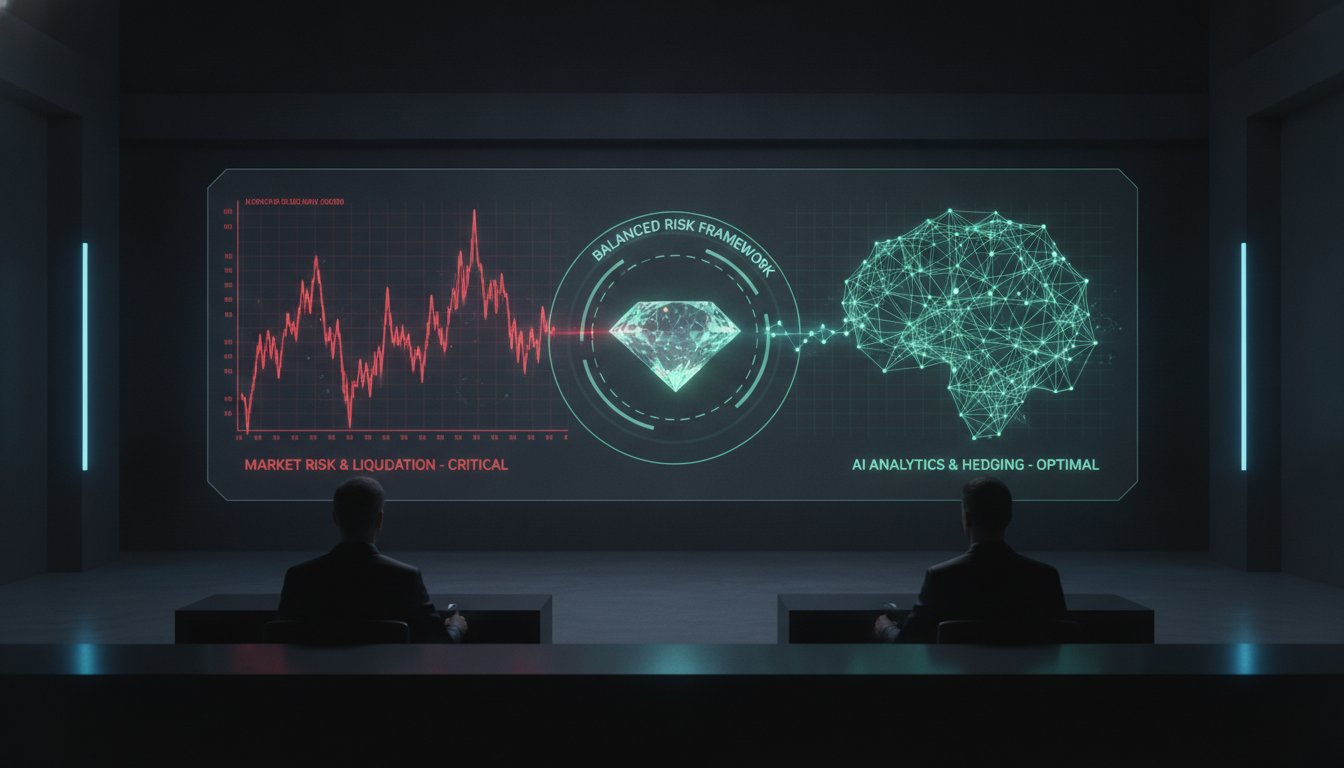
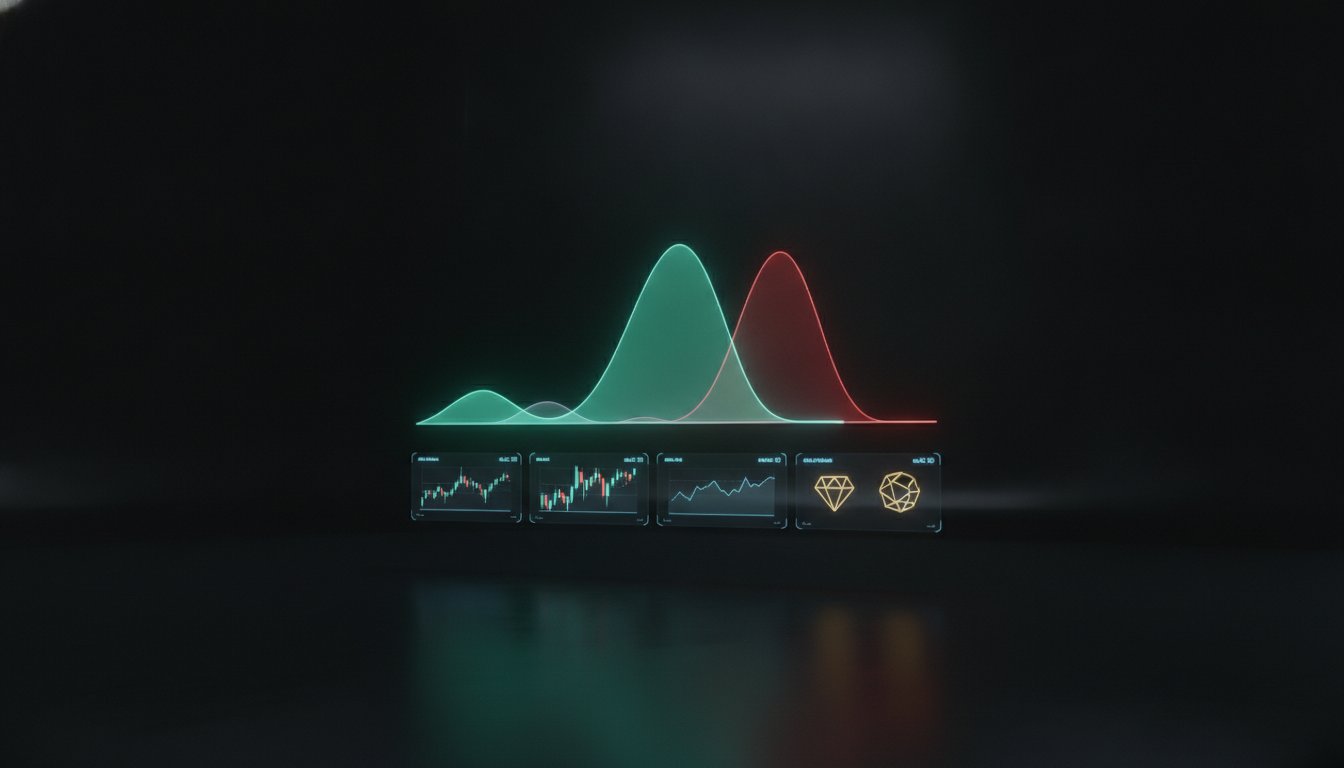
The most critical insights occur when price action and sentiment scores diverge. A Bearish Divergence happens when price continues to set new highs, but sentiment plateaus or begins to decline. This suggests the rally is losing its psychological support. Conversely, a Bullish Divergence occurs when price is still dropping, but sentiment begins to recover from extreme lows. This indicates that the selling climax has passed. The integration of AI for crypto technical analysis ensures that every social signal is weighted according to historical accuracy rather than current hype. The 'Sentiment-Price Gap' serves as a definitive lead indicator for identifying cycle reversals before they manifest in price candles.
How AI for Crypto Technical Analysis Quantifies the Unquantifiable
Quantifying psychology requires more than a basic script. It demands a sophisticated technical stack. Natural Language Processing (NLP) identifies the intent behind a post, not just the keywords. Utilizing Claude AI for nuanced context analysis allows the system to distinguish between genuine panic and ironic humor. This is critical in the crypto space where sarcasm is prevalent. Multi-source aggregation draws from X, Reddit, and Bitcointalk to ensure no single platform skews the data. Academic findings on AI in Cryptocurrency Markets highlight how these models provide a definitive edge over traditional statistical methods. The result is a real-time, clinical 0-1 sentiment index. It converts textual chaos into a functional data stream.
Linguistic Analysis vs. Keyword Counting
Keyword counting is a legacy approach. It's often inaccurate. AI for crypto technical analysis focuses on structural intent instead of volume. Phrases like 'To the moon' are high-volume but low-value. They're filtered as noise. Conversely, 'Protocol upgrade successful' or 'Mainnet launch confirmed' are categorized as informative data. Domain-specific dictionaries are essential for this precision. Terms like HODL, REKT, and Whale are processed as specific technical markers rather than slang. Implementing sentiment analysis in cryptocurrency removes the subjectivity inherent in manual research. It replaces gut feelings with backtested linguistic patterns.
The Speed Advantage
Execution speed is the difference between a validated entry and a late trade. Sub-millisecond processing of global news feeds is mandatory for institutional performance. We utilize GCP Tokyo co-location to minimize latency and ensure data integrity. This infrastructure monitors Reuters and Bloomberg feeds for institutional-grade triggers 24/5. Automated news analysis categorizes events before a human can even read the headline. High-frequency algorithmic filters reduce the Noise-to-Signal ratio. 5 AI agents. 8 signal filters. This system converts global chatter into actionable intelligence. You can leverage this institutional-grade intelligence to refine your own cycle analysis and eliminate emotional interference.
How to Identify Crypto Market Cycles Using Sentiment Data
Identifying market cycles requires a transition from raw sentiment scores to structural mapping. You aren't looking for a single high-tier score. You're looking for a pattern of clusters that indicate a shift in the underlying psychological regime. Utilizing AI for crypto technical analysis allows you to establish these patterns against a historical backdrop. It removes the guesswork that plagues manual chart overlays. This is not about intuition; it's about mapping the crowd's emotional state to a four-phase technical framework.
Step 1: Establishing the Neutral Zone
A common error among retail traders is assuming 0.5 on a 0-1 scale represents neutrality. It doesn't. Cryptocurrency communities maintain a persistent 'Bull Market Bias' that skews the data. You must determine the 'neutral' zone for a specific asset over a minimum 180-day lookback period. This baseline allows the system to identify the 'Panic Floor' for Bitcoin and Ethereum. It's the level where sentiment cannot drop further despite continued price decreases. This process aligns with systematic crypto trading principles. It treats sentiment as a quantifiable technical variable rather than a vague mood.
Step 2: Detecting the Distribution Phase
The Distribution phase is marked by peak euphoria and decreasing liquidity. Our AI monitors the specific ratio of 'emotional' messages to 'informative' messages across global feeds. When this ratio reaches 5:1, the market is approaching a state of irrational overextension. Narrative Exhaustion is the next clinical marker. This occurs when news sentiment remains at high levels but price action fails to produce new local highs. The crowd is bullish, yet the buying power is gone. High-frequency AI models identify the 'Retail FOMO' peak by detecting a surge in low-conviction sentiment clusters before the markdown phase begins.
Multi-Timeframe Confirmation and Divergence
Multi-timeframe confirmation serves as the final technical filter. You must align daily sentiment trends with broader weekly cycle projections to avoid reacting to temporary noise. A daily spike is a fluctuation; a weekly cluster is a regime shift. Execution is triggered by Divergence. If price continues to climb while the 7-day sentiment score plateaus or declines, the cycle is ending. The smart money is liquidating into retail liquidity. This clinical approach ensures you don't enter trades during the final blow-off top. It prioritizes capital preservation through technical precision. 5 AI agents. 8 signal filters. This is the difference between a speculative guess and a data-driven entry.
Filtering Market Noise: The 8-Layer Validation Framework
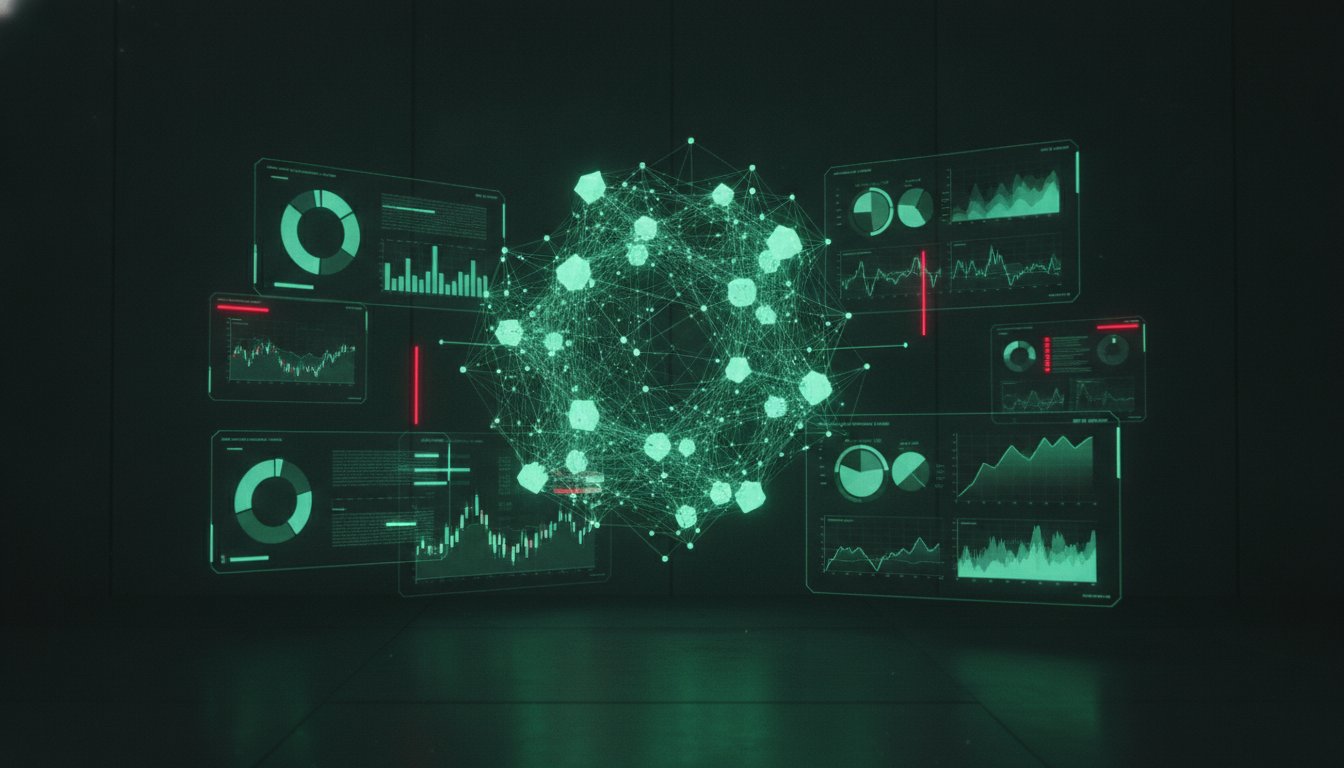
Raw sentiment data is a liability without a validation layer. Modern crypto markets are saturated with synthetic noise designed to trigger retail FOMO. An 8-layer validation framework converts this textual chaos into high-conviction intelligence. This systematic approach filters out 15-minute anomalies that often trap manual traders. We move from raw social scraping to multi-timeframe confirmation. Each layer acts as a technical gatekeeper. Only the signals that survive all eight filters are delivered to the technician. Utilizing AI for crypto technical analysis ensures that your entries are based on validated data rather than bot-driven illusions.
Source weighting is a critical component of this framework. Not all data points carry equal value. A lead developer's technical update on GitHub or a verified institutional announcement carries significantly more weight than a thousand anonymous posts. Our system applies a hierarchical weighting model that prioritizes expertise and historical accuracy. This ensures that the sentiment index reflects the reality of the market rather than the volume of the crowd. 5 AI agents. 8 signal filters. One objective output.
Eliminating Synthetic Sentiment
Coordinated bot attacks are a persistent threat to data integrity. These automated campaigns are designed to artificially inflate sentiment scores before a distribution event. Our AI agents identify these patterns by analyzing metadata, posting frequency, and linguistic repetition. We utilize a 'Credibility Layer' to weight sources. This hierarchical weighting is a core feature of ai for crypto market analysis tools. It automates the validation process. It removes the human error of trusting the loudest voice in the room. If a signal doesn't pass the bot-detection filter, it's discarded immediately.
Risk Assessment Integration
Sentiment doesn't exist in a vacuum. It must be cross-referenced with liquidity and volatility trackers to establish a safety profile. The 'Safety Trigger' is a critical component of this framework. High sentiment paired with low liquidity is a 'trap' signal. It indicates that the crowd is bullish, but there isn't enough depth to support a sustained move. We integrate these findings with crypto risk management tools to protect trading capital. This clinical cross-referencing ensures that sentiment shifts are backed by actual market participation. It prevents entering trades during low-liquidity spikes that are prone to immediate reversals.
Multi-timeframe filtering serves as the final barrier. A sentiment spike on a 5-minute chart is often a reaction to a single post. A validated cycle shift requires confirmation across daily and weekly timeframes. This ensures the trend is structural rather than reactionary. You can access this level of institutional-grade validation to secure your own trading engine against market noise.
Automating Your Cycle Analysis with Sniper AI Weekly
Sniper AI Weekly delivers 8-layer validated intelligence directly to your inbox. This bypasses the need for complex API configurations or manual technical setups. It provides a direct link to institutional-grade data without the infrastructure overhead. Utilizing AI for crypto technical analysis at this level ensures that your strategy is backed by the same data used by algorithmic desks. 24/5 monitoring keeps your analysis aligned with institutional precision. The system validates. You execute. It's a streamlined process designed for speed and technical accuracy. You don't need a background in data science to access professional-grade results.
The 24/5 monitoring schedule intentionally aligns crypto analysis with traditional institutional hours. While the market operates 24/7, global liquidity and institutional activity peak during these windows. Our framework focuses on these high-conviction periods to ensure the signals you receive are structural rather than noise. It's about quality over quantity. This synchronization allows retail technicians to move in tandem with the world's most sophisticated trading floors.
Weekly Intelligence Reports
Stop scanning social feeds for directional clues. Start executing based on validated data. Our reports provide automated trend identification by mapping the sentiment-price gap across multiple timeframes. You receive a clinical summary of macro sentiment shifts and cycle phase confirmations. These reports don't just provide scores. They provide context. You'll see exactly where the market stands in the Accumulation-to-Distribution pipeline. This 'Institutional Edge' removes the research subjectivity that leads to emotional trading errors. It's high-tier intelligence delivered with technical clarity. 5 AI agents. 8 signal filters. One actionable report.
Your Funds, Your Control
Security is a non-negotiable technical protocol. Sniper Network operates as a data provider, not a custodian. We never hold user assets. This non-custodial architecture ensures you maintain 100% control over your portfolio at all times. We provide the intelligence; you maintain the execution. Transparency is a core brand pillar, evidenced by our 'No Card Required' trial. We don't ask for payment details upfront because the data speaks for itself. You get full access to the intelligence engine to test the system's accuracy without friction. It's a frictionless onboarding process designed for high-frequency environments. Your API key, your funds. It's a commitment to professional-grade transparency.
◈ Start your Sniper AI Weekly trial and master market cycles today.
Mastering Regime Shifts with Validated Intelligence
Identifying market cycles is no longer a matter of intuition. It's a technical requirement. By mapping the four-phase market progression against quantified crowd psychology, you eliminate the emotional errors that trap retail participants. Utilizing AI for crypto technical analysis allows you to detect the precise moment when sentiment decouples from price action. This systematic approach converts social chaos into a clinical lead indicator. You've learned how an 8-layer validation framework filters synthetic noise. This ensures your cycle analysis is based on high-conviction data rather than bot-driven illusions.
Precision execution requires institutional-grade infrastructure. Our system leverages Claude AI and GCP Tokyo co-location to process millions of data points with sub-millisecond efficiency. This is a non-custodial solution. Your API key, your funds. We provide the intelligence; you maintain absolute control. It's time to move from reactive trading to proactive technical mastery. Secure your edge with data that doesn't blink.
◈ Access Institutional-Grade Market Intelligence with Sniper AI Weekly
Frequently Asked Questions
Is AI sentiment analysis accurate for low-cap gem coins?
Accuracy is directly correlated with data density. AI for crypto technical analysis is most reliable on high-volume assets like Bitcoin and Ethereum where the sample size is statistically significant. Low-cap assets often lack the message volume required to establish a stable 180-day neutral baseline. Without sufficient data, the risk of reacting to synthetic noise increases.
Can AI detect when a market cycle is about to reverse?
AI identifies reversals by detecting a decoupling between price and psychology. When price sets new highs while sentiment scores plateau or decline, the system triggers a Bearish Divergence signal. This Sentiment-Price Gap is a lead indicator of structural regime shifts. It allows technicians to exit positions before the markdown phase begins.
How does Sniper Network filter out bot-generated social media hype?
We utilize an 8-layer validation framework to isolate synthetic activity. AI agents analyze metadata, posting frequency, and linguistic repetition to identify coordinated bot attacks. If a signal fails the bot-detection layer, it's discarded. This ensures that the intelligence delivered in Sniper AI Weekly reflects genuine market participation rather than automated manipulation.
Is sentiment analysis better than technical analysis for crypto?
Sentiment analysis is a specialized branch of technical analysis. It provides the psychological context that drives price action. While traditional indicators track what happened, sentiment data explains why it happened. Integrating both disciplines creates a more robust framework for identifying cycle phases and reducing emotional trading errors.
How often should I check crypto sentiment data?
Structural cycle shifts occur over weeks, not minutes. Checking sentiment data once per day is sufficient for identifying trend shifts. High-frequency monitoring often leads to overtrading based on temporary noise. Our framework focuses on daily and weekly confirmations to ensure the signals are structural rather than reactionary.
Does Sniper Network hold my funds during the analysis process?
No, we never hold user assets or provide custodial services. We are a technical intelligence provider. Your API key, your funds. This clinical commitment to security ensures that you maintain 100% control over your portfolio while utilizing our data streams. We provide the intelligence; you maintain the execution.
What is the difference between emotional and informative sentiment in AI?
Emotional sentiment tracks crowd psychology like euphoria or panic. Informative sentiment categorizes technical data like protocol upgrades or institutional news. Claude AI distinguishes these categories to weight signals based on their structural impact. A 5:1 ratio of emotional to informative messages often signals a cycle peak.
Why is a weekly report better than real-time sentiment tickers?
Weekly reports filter out the 15-minute anomalies that trap retail traders. They focus on macro cycle phases and 8-layer validated intelligence. Real-time tickers often present noise as opportunity, leading to high-frequency errors. Sniper AI Weekly provides a clinical summary of the trend, ensuring your strategy remains aligned with institutional-grade projections.